
Choosing between tallow and plant oils for your skincare routine can feel overwhelming with countless natural options flooding the market. Each promises unique benefits, but understanding their true differences helps you make smarter decisions for your skin's health. This guide breaks down the science, benefits, and limitations of both so you can confidently select what works best for you.
Table of Contents
- Understanding Tallow: Origins, Composition, And Skin Compatibility
- Comparing Plant Oils: Fatty Acids, Benefits, And Limitations
- How To Choose Between Tallow And Plant Oils For Your Skin Type
- Common Misconceptions And Evidence On Tallow's Skincare Effectiveness
- Explore Natural Skincare With Golden Tallow Products
Key takeaways
| Point | Details |
|---|---|
| Tallow matches human skin | Its fatty acid profile closely resembles natural sebum for superior absorption |
| Plant oils offer variety | Different oils provide diverse antioxidants and fatty acids for specific skin needs |
| Comedogenic ratings matter | Tallow rates lower than coconut oil, making it better for acne-prone skin |
| Scientific evidence is limited | No clinical trials definitively prove tallow's topical skin healing benefits |
| Choose based on your skin type | Absorption, comedogenicity, and ingredient composition guide the best choice |
Understanding tallow: origins, composition, and skin compatibility
Tallow comes from rendered beef suet, a process that separates pure fat from water and proteins. This rendering creates a stable product with a long shelf life that works remarkably well on human skin.
The fatty acid composition sets tallow apart. It contains approximately 47% oleic acid, 26% palmitic acid, and 14% stearic acid. These ratios mirror the natural oils your skin produces, making absorption smooth and effective.
Key fatty acids in tallow:
- Oleic acid supports skin barrier function and moisture retention
- Palmitic acid provides emollient properties without excessive greasiness
- Stearic acid delivers conditioning benefits and texture
- Small amounts of conjugate linoleic acid (CLA) from grass-fed sources
Grass-fed tallow offers superior nutritional content compared to grain-fed varieties. The enhanced fatty acid profile includes better omega-3 to omega-6 ratios and higher levels of fat-soluble vitamins A, D, E, and K. These nutrients support skin health through antioxidant protection and cellular repair mechanisms.
The similarity to human sebum allows tallow to integrate seamlessly into your skin's lipid barrier. This compatibility means it absorbs without leaving heavy, greasy residue that sits on the surface. Dry and sensitive skin types particularly benefit from this deep penetration and nourishment.
Pro Tip: Look for tallow from grass-fed, pasture-raised cattle to maximize nutrient density and fatty acid quality in your skincare products.
Comparing plant oils: fatty acids, benefits, and limitations
Plant oils bring diverse chemical profiles that differ significantly from both tallow and human sebum. Understanding these differences helps you recognize when plant oils might serve your skin better or fall short.
Coconut oil dominates the natural skincare market but contains primarily lauric acid, which doesn't match sebum composition. While lauric acid offers antibacterial benefits, it can leave a greasy film and potentially clog pores in acne-prone individuals. The medium-chain triglycerides absorb differently than the long-chain fats in tallow.

Lanolin and shea butter provide alternative plant-based and animal-based options. Lanolin creates protective barriers that lock moisture into skin, while shea butter delivers plant-derived hydration through its unique fatty acid blend. Both differ in texture, absorption rate, and skin feel compared to tallow.
Plant oil comparison:
| Oil Type | Primary Fatty Acids | Best For | Limitations |
|---|---|---|---|
| Coconut | Lauric acid (50%) | Antibacterial needs | High comedogenic rating, greasy feel |
| Jojoba | Eicosenoic acid | Sebum regulation | Expensive, may oxidize quickly |
| Argan | Oleic, linoleic | Anti-aging care | Lower vitamin content than tallow |
| Shea butter | Stearic, oleic | Deep moisture | Heavy texture, slow absorption |
Linoleic acid content matters significantly for skin health. Many plant oils contain higher linoleic acid levels than tallow, which can benefit acne-prone skin by supporting barrier function and reducing inflammation. This makes certain plant oils better choices for oily or problematic skin types.
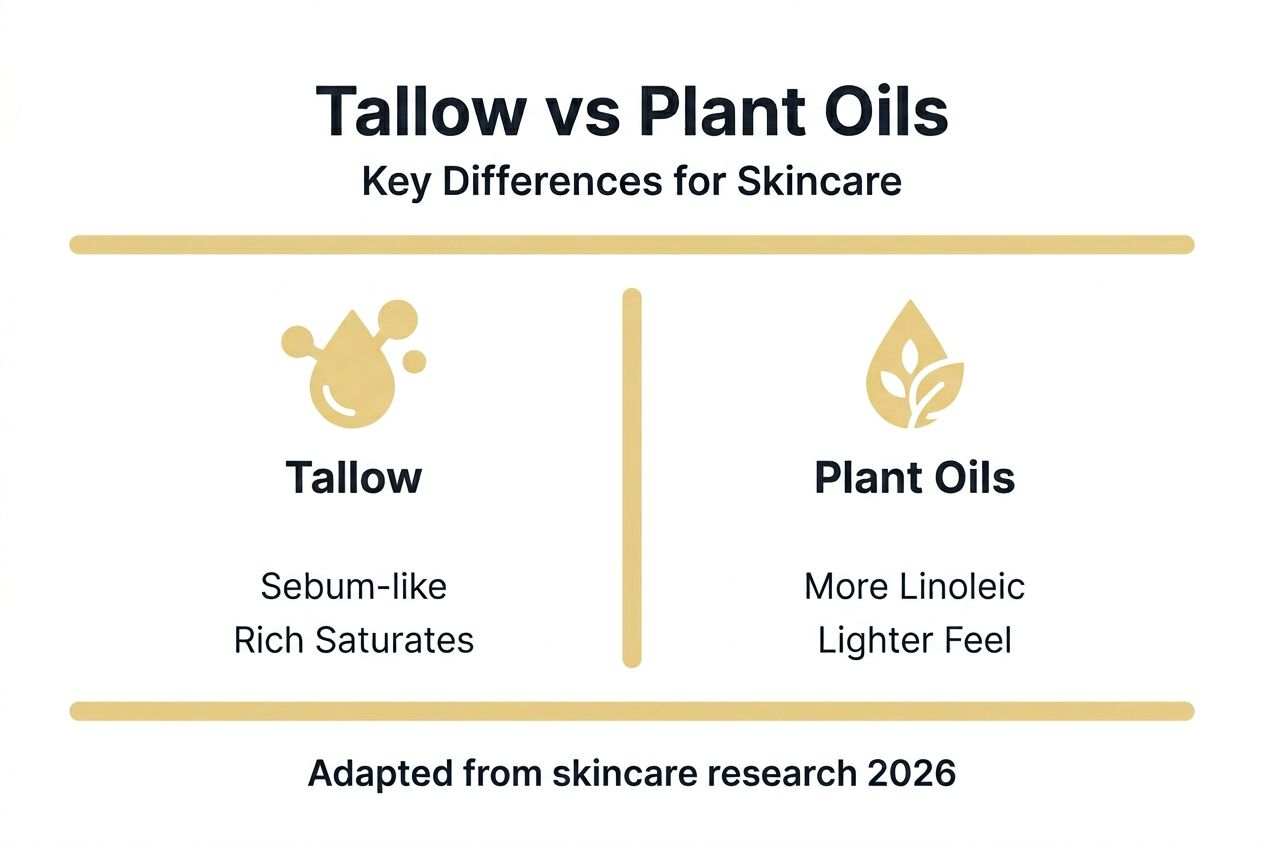
The right plant oil depends on what you need. Antimicrobial protection, specific vitamin profiles, or lighter textures might make plant oils preferable. However, none match tallow's overall similarity to human sebum, which remains its primary advantage.
Pro Tip: Consider using our tallow honey cream moisturizer that combines tallow's absorption benefits with honey's natural antimicrobial properties for balanced skincare.
How to choose between tallow and plant oils for your skin type
Your skin type dictates which oil works best. Start by honestly assessing whether you have dry, sensitive, oily, combination, or acne-prone skin. Each responds differently to various fatty acid profiles.
Decision framework:
- Evaluate your primary skin concern (dryness, acne, sensitivity, aging)
- Research the comedogenic rating of oils you're considering
- Match fatty acid composition to your skin's specific needs
- Test products with patch tests before full-face application
- Monitor results over 4-6 weeks before switching products
Comedogenic ratings provide crucial guidance. Tallow rates approximately 2 on the comedogenic scale, significantly lower than coconut oil's rating of 4. This makes tallow less likely to clog pores and trigger breakouts in most people. If you struggle with acne, this difference matters enormously.
Skin type recommendations:
- Dry skin: Tallow, shea butter, or argan oil for deep moisture
- Sensitive skin: Tallow or calendula-infused oils for gentle care
- Oily skin: Jojoba or oils high in linoleic acid
- Acne-prone skin: Tallow (low comedogenic) or rosehip seed oil
- Mature skin: Tallow combined with antioxidant-rich plant oils
Fatty acid balance affects how your skin responds. Linoleic acid supports barrier health and can reduce acne severity, making it important for problematic skin. Tallow contains lower linoleic acid than some plant oils, which might limit its effectiveness for certain acne types.
Plant oils offer specific benefits tallow cannot provide. Antibacterial properties in tea tree or neem oil, high antioxidant content in pomegranate seed oil, or specialized vitamins in rosehip oil fill gaps in tallow-only routines. Combining both types strategically often yields the best results.
Product formulation quality matters as much as ingredient choice. Well-crafted products like our tallow honey cream moisturizer balance multiple beneficial ingredients for synergistic effects.
Pro Tip: Start with a small area patch test for 48 hours when trying any new oil, whether tallow or plant-based, to identify potential reactions before applying to your entire face.
Common misconceptions and evidence on tallow's skincare effectiveness
Tallow's popularity in natural skincare has generated numerous claims about its benefits. Separating fact from marketing requires examining the actual scientific evidence.
The skincare industry often promotes tallow as scientifically proven for skin healing and moisture. However, no controlled human clinical trials support these topical benefits conclusively. This evidence gap means many claims rest on tradition and anecdote rather than rigorous testing.
What we actually know:
- Tallow's fatty acid profile matches sebum composition (biochemical fact)
- Traditional cultures used tallow for skin protection (historical evidence)
- Individual users report positive experiences (anecdotal data)
- Animal studies suggest moisturizing potential (limited applicability)
- No human trials validate healing or anti-aging claims (significant gap)
Current research consists mainly of animal studies and basic biochemical analysis. While these provide valuable insights into mechanisms, they don't confirm effectiveness in human skin under real-world conditions. The leap from lab findings to proven skincare benefits remains unsupported.
"The absence of clinical trials doesn't mean tallow doesn't work, but it does mean we cannot make definitive medical or therapeutic claims about its benefits based on current scientific literature."
Traditional use offers important context. Cultures have used animal fats for skin protection for thousands of years, suggesting practical value. This historical evidence, combined with tallow's chemical similarity to sebum, provides reasonable basis for trying it. Just understand that scientific validation hasn't caught up with traditional practice.
Setting realistic expectations helps you evaluate results honestly. Tallow may moisturize, protect, and nourish your skin effectively without being a miracle cure. Its benefits likely stem from providing fatty acids your skin recognizes and uses, not from unique healing properties absent in other quality moisturizers.
Balanced perspective:
- Use tallow for its known properties (moisture, barrier support)
- Don't expect scientifically unproven benefits (acne cure, wrinkle removal)
- Combine with other evidence-based skincare practices
- Evaluate your personal results over marketing claims
Understanding these limitations helps you make informed choices. Tallow-based products can be excellent skincare options without needing exaggerated claims to justify their use.
Explore natural skincare with Golden Tallow products
Ready to experience tallow-based skincare for yourself? Golden Tallow offers carefully crafted products that embody the natural, simple philosophy discussed throughout this guide.
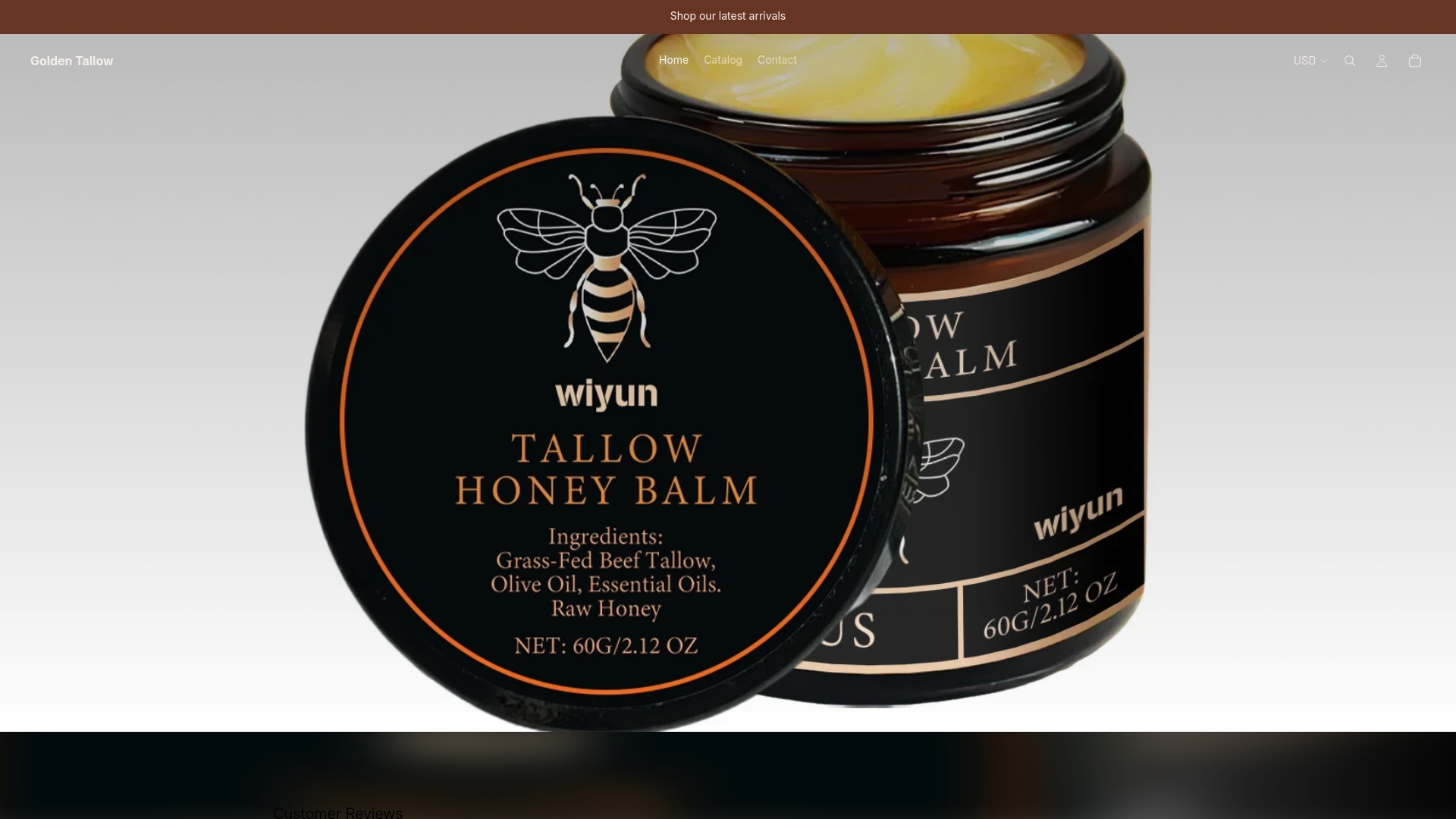
Our tallow honey cream moisturizer combines grass-fed tallow with raw honey for balanced hydration and natural antimicrobial benefits. This formulation addresses the fatty acid needs your skin craves while adding honey's proven skin-soothing properties.
Enhance your routine with our spa face lifting brush set, which complements natural skincare through facial massage and lymphatic drainage. These tools help products absorb better while promoting circulation and relaxation.
Visit the Golden Tallow homepage to explore our complete range of natural skincare solutions designed for health-conscious consumers seeking traditional, wholesome ingredients.
FAQ
Is tallow better than plant oils for all skin types?
Tallow works exceptionally well for dry and sensitive skin due to its sebum-like composition and deep absorption. However, it may lack sufficient linoleic acid for some acne-prone skin types, where certain plant oils could perform better. Choose based on your specific skin needs rather than assuming one option suits everyone.
Does tallow cause acne or clogged pores?
Tallow has a moderate comedogenic rating around 2, making it less likely to clog pores than coconut oil, which rates 4. Individual reactions vary significantly, so patch testing remains essential to assess how your unique skin responds before committing to regular use.
Are there scientific studies proving tallow's skin benefits?
No controlled human clinical trials confirm tallow's moisturizing or healing benefits for skin when applied topically. Current research consists mainly of animal studies and basic biochemical analysis, creating significant evidence gaps that prevent definitive clinical claims about effectiveness.
Can I combine tallow with plant oils in my routine?
Combining tallow with complementary plant oils often yields excellent results by providing fatty acids tallow lacks while maintaining its absorption benefits. Consider using tallow as your base moisturizer and adding targeted plant oils for specific concerns like antioxidant protection or antibacterial action.
How long does tallow-based skincare last?
Properly rendered and stored tallow remains stable for 12-18 months due to its saturated fat content. Keep tallow products in cool, dark places and watch for any rancid odors that indicate oxidation. Quality formulations often include natural preservatives to extend shelf life safely.